Composite Radome Materials for Aerospace RF Applications
Advanced composite architectures engineered for RF transparency, controlled dielectric performance and high-temperature stability in aerospace and defense environments.
Engineering Beyond Geometry
Radome performance is not defined by shape alone. It is determined by the dielectric architecture of the composite material.
Apollinaire develops composite radome materials optimized to simultaneously control :
- Relative permittivity (εr)
-
Loss tangent (tan δ)
-
Dielectric strength
-
Thermal endurance
Our approach integrates electromagnetic, electrical and thermal constraints into a single engineered composite system.
Critical Performance Parameters
Relative Permittivity (εr)
Controlled dielectric constant ensures radar transparency and impedance stability.
Typical engineered range: 2.7 – 4.0 depending on architecture.
Loss Tangent (tan δ)
Low loss tangent minimizes signal attenuation and preserves radar performance.
Typical range: 0.003 – 0.015 (frequency dependent).
Dielectric Strength
High dielectric strength ensures reliability under high-voltage aerospace systems.
Typical range: 15 – 28 kV/mm depending on material system.
Thermal Stability (Tmax)
Composite architectures designed for continuous operation up to 260°C in high-temperature environments.
Material Platforms
Apollinaire develops composite radome materials based on:
-
BMI high-temperature systems
-
RF-optimized epoxy architectures
-
High-temperature polyimide systems
-
Specialized vinylester composites
Each platform is engineered according to electromagnetic and thermal constraints of the target application.
From Engineering Samples to Material Architectures
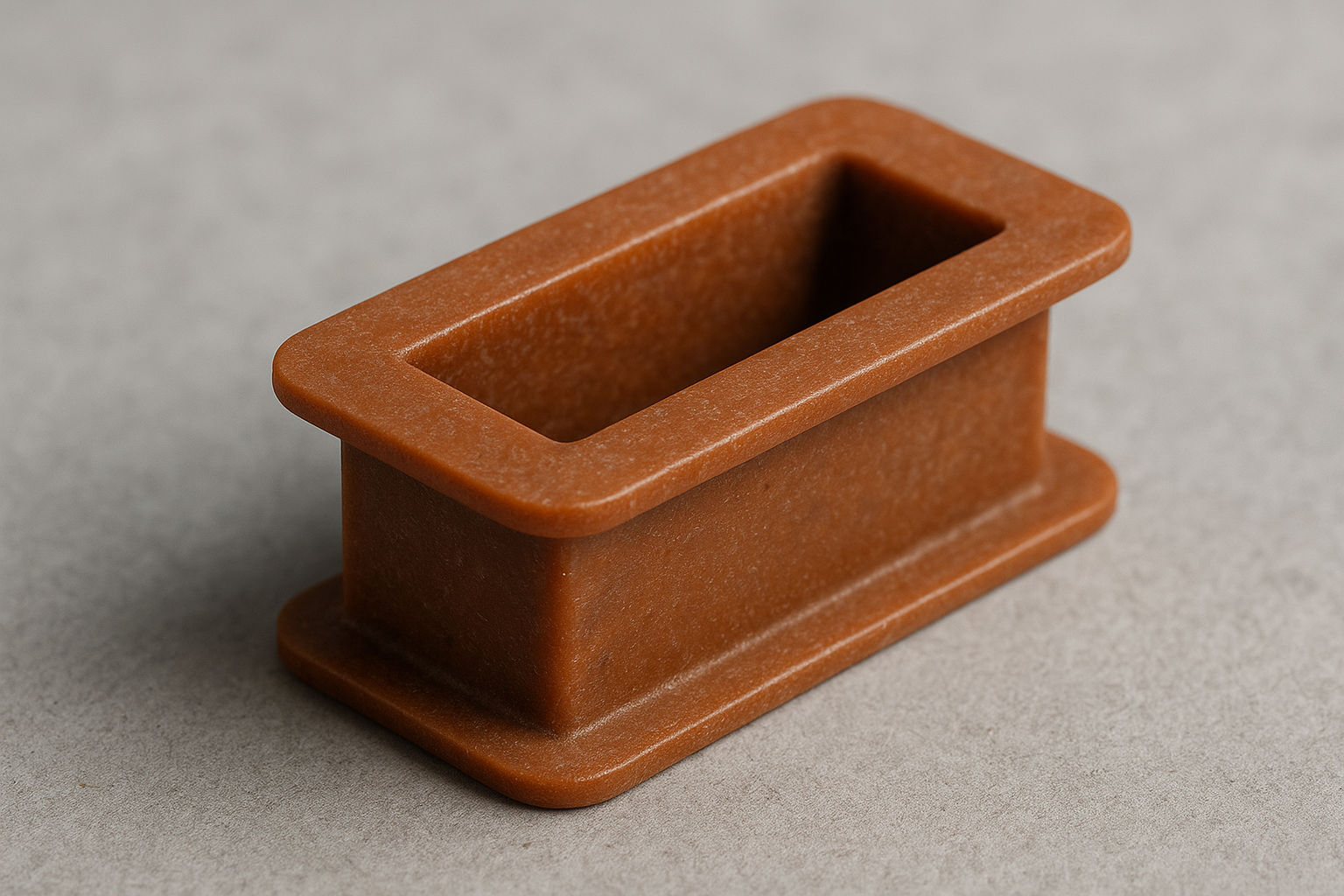
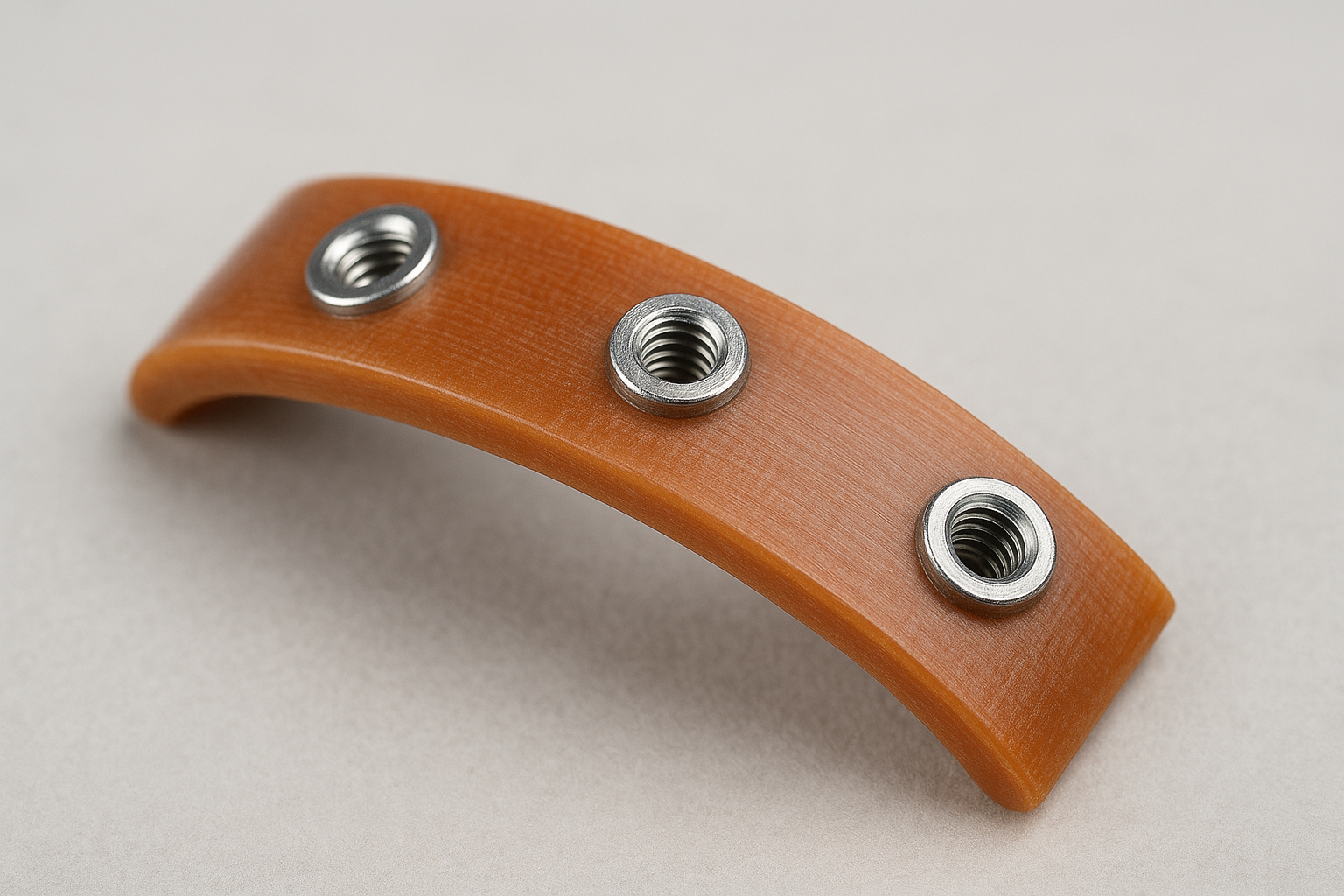
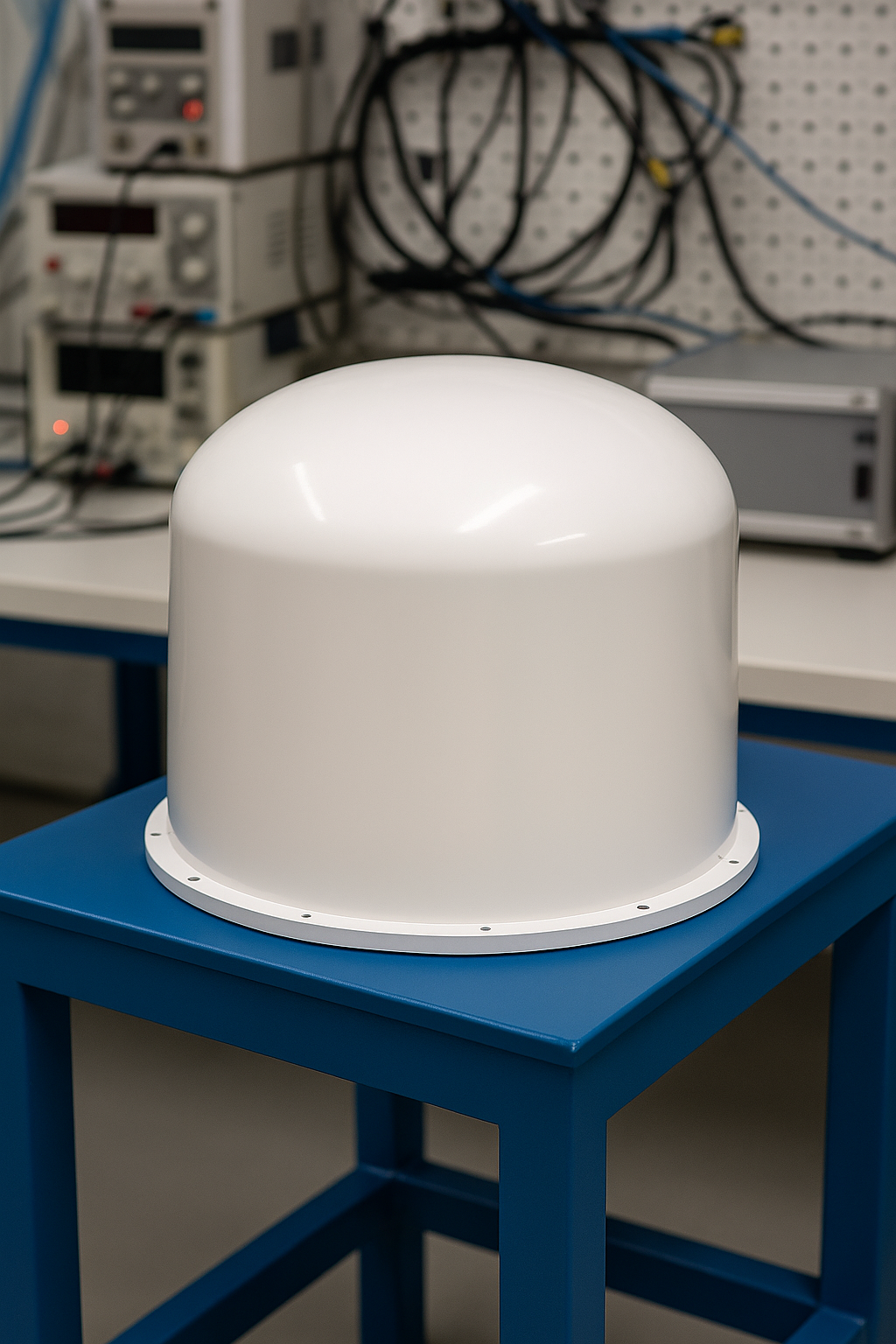
The radome samples presented in our engineering case illustrate representative composite platforms developed for aerospace RF and electrical applications.
While geometries remain similar, each sample reflects a distinct material architecture engineered to balance electromagnetic transparency, dielectric strength and thermal endurance.
These samples are not product references.
They demonstrate performance-driven material families optimized for multi-constraint aerospace environments.
Each architecture is defined by controlled dielectric properties and tailored resin systems selected according to operational requirements.
High-Temperature RF Architectures
Composite systems based on BMI or P25 and high-temperature polymer matrices designed for stable dielectric behavior and structural integrity in elevated thermal environments.
Typical focus:
- Airborne radar systems
- High-speed platforms
- Severe thermal cycling
Balanced RF & Electrical Architectures
Epoxy-based composite platforms engineered to combine low loss tangent performance with high dielectric strength.
Typical focus:
- X-band radar applications
- UAV systems
- Integrated RF and electrical protection
The engineering kit presented physically reflects these architecture families.
Detailed material selection and characterization data are available upon request under NDA.
Typical Performance Envelope
| Parameter | Range |
|---|---|
| εr | 2.7 – 4.0 |
| tan δ | 0.003 – 0.015 |
| Dielectric Strength | 15 – 28 kV/mm |
| Continuous Service Temperature | Up to 260°C |
Performance varies depending on fiber architecture, resin system and operating frequency.
Aerospace & Defense Applications
Airborne Radomes
Low-loss composite solutions for X-band and Ku-band radar systems.
UAV Radar Systems
Lightweight RF transparent composite architectures optimized for endurance and thermal cycling.
Ground Radar Systems
Stable dielectric composite structures for severe environmental conditions.
Integrated Electrical & RF Protection
Composite systems combining signal integrity and dielectric insulation.
Why Apollinaire
-
Multi-constraint material engineering
-
Controlled dielectric architecture
-
High-temperature composite expertise
-
Aerospace-focused development
-
Engineering validation under NDA
More information...
Request Detailed Engineering Data
Engineering data and characterization reports available upon NDA.